Walls and ceilings across Natchitoches Parish
Drywall Repair in Natchitoches, LA
Holes, settling cracks, seams that have let go in the damp, and ceilings marked by a roof leak, brought level with the wall and given its texture back, so a painted patch doesn't draw the eye.
Ring us and someone who patches walls around Natchitoches calls back to hear what happened and arrange a quote.
Call 7 days, 7am–9pm · Text us a snapshot · Our process
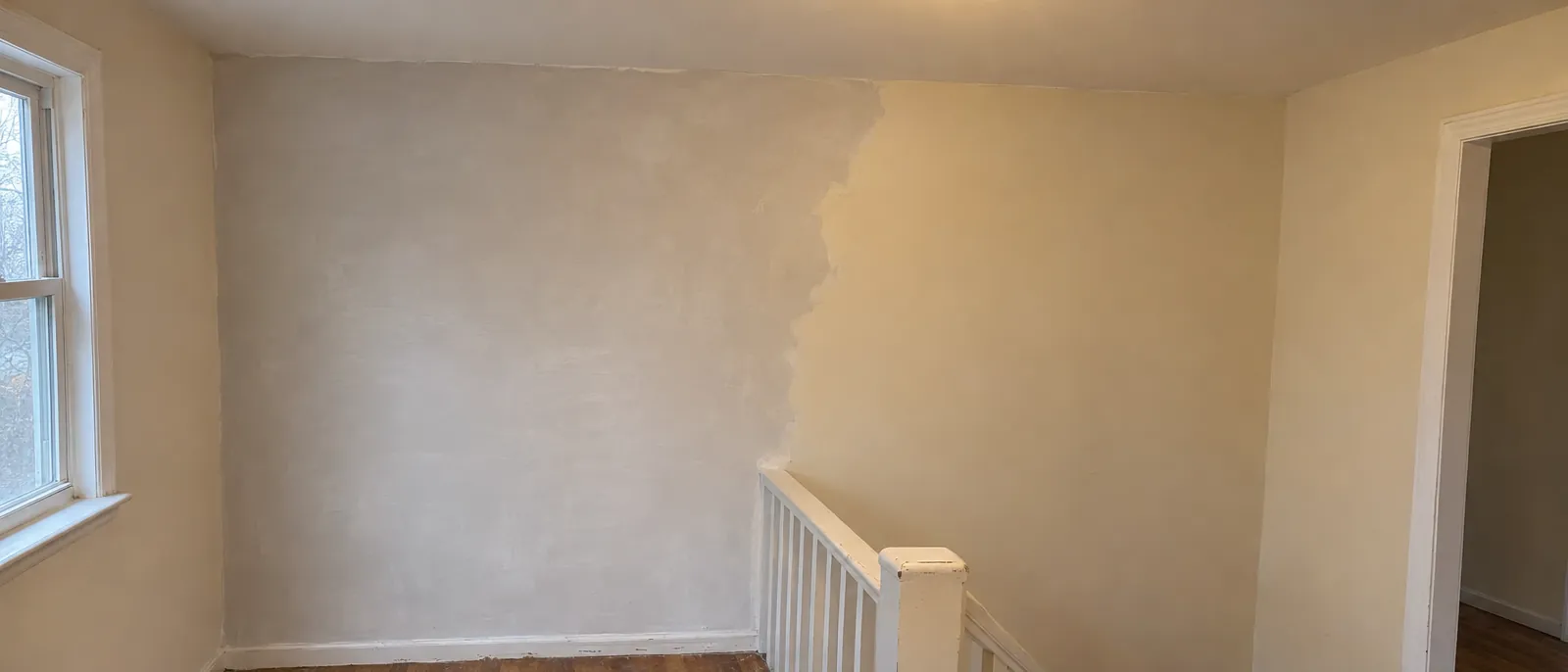
Smooth, orange peel or knockdown: the patch is finished in the pattern already on the wall.
The year Natchitoches was established. Walls in its older houses can be plaster on wood lath rather than board.
01Drop cloths to primer: how the day runs
A patch that is taped, coated and textured nearly always needs more than one trip, because compound has to cure between coats. Here is what a careful repair day involves, so you can plan the room around it and know what to ask for.
- Clear the wallMove what you can from the floor in front of the damage and take down pictures and shelves nearby. Furniture too heavy to shift gets covered where it stands.
- Cover and close offDrop cloths go along the wall, and plastic is taped over doorways and return vents when sanding is planned. If dust is a concern, ask about a vacuum sander while the price is being worked out.
- Open and prepAnything wet, soft or crumbling is trimmed away until the edges are solid board or firm plaster, and backing is added wherever the patch would have nothing to grip.
- CoatsTape goes over the seams, then two or three coats of compound, each one wider and thinner than the last, so the repair blends out instead of standing proud of the wall.
- CureIn Natchitoches humidity, compound can take longer to dry than the bag says. Air conditioning or a fan helps. A coat put on too soon is how a seam cracks again.
- Texture, prime, tidyThe patch is sanded level, given its texture and spot-primed so the finish paint has a sound, even base. Ask whether bagging debris and vacuuming the floor are in the price.
02Repairs, by what you are seeing
Each repair has its own page with the detail: what causes it, how it is put right and what affects the price.
- Plaster and Drywall Patching
- Doorknob holes, dents and crumbling spots in old plaster or newer board, backed, filled and brought level with the wall.
- Drywall Tape and Seam Repair
- Joint tape that has bubbled, peeled or split along a seam; the lifted strip is sliced away and the joint bedded again.
- Water-Damaged Ceiling Repair
- Stains, soft spots and sagging board after a roof or AC leak, cut back, dried, replaced and sealed before paint.
- Wall and Ceiling Crack Repair
- Settling cracks over doors, at corners and along ceiling joints, opened, taped and refinished rather than caulked over.
03Wall openings from wiring, pipes and ductwork
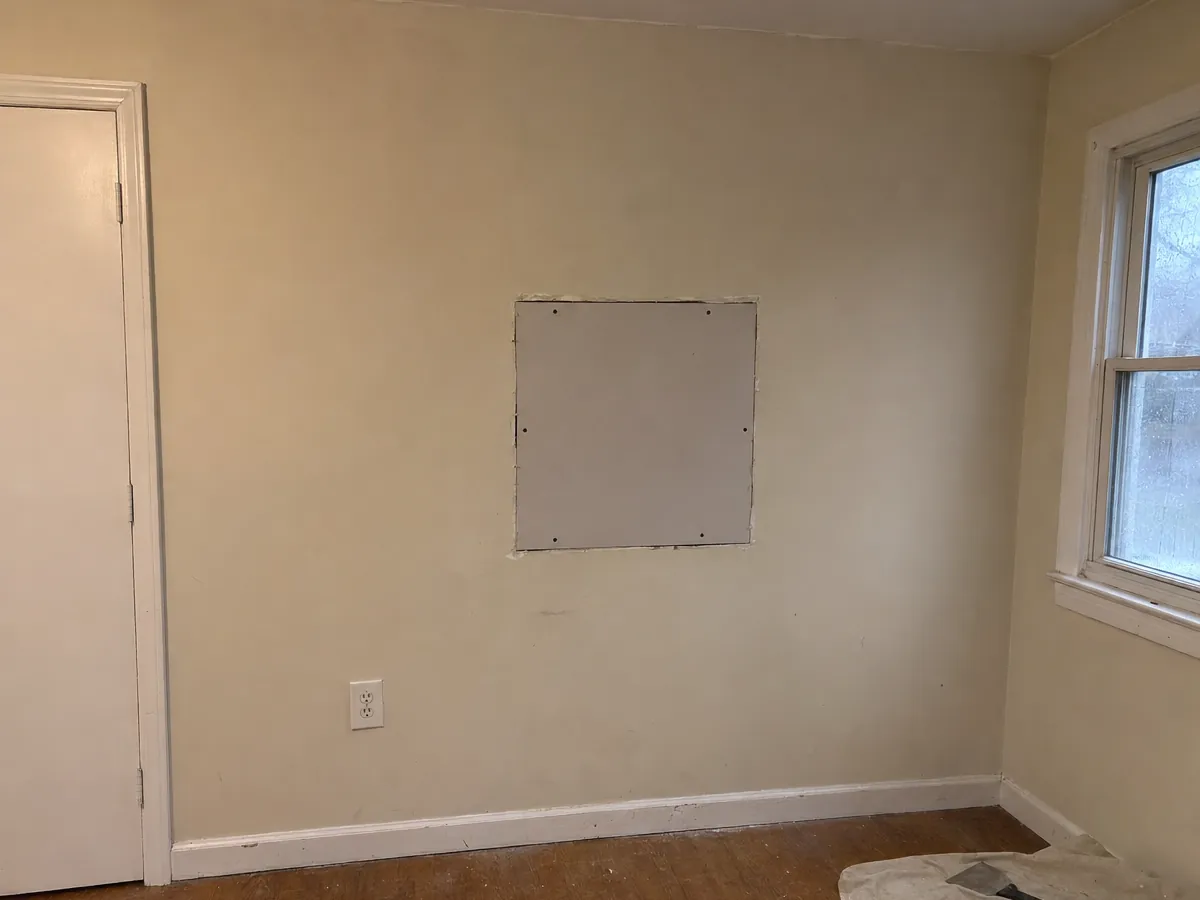
A new circuit pulled through by an electrician, a plumber reaching a shower valve, an HVAC installer running a return, or someone pulling cable for a TV mount all leave the same thing behind: a hole that was cut to get the job done, not to be closed neatly. Those openings are often ragged, sometimes larger than they needed to be, and rarely have anything behind the edges to screw a patch to.
Closing one properly starts by trimming the opening square and adding wood or metal backers inside the cavity so the new piece is held at every edge. The patch is cut from board of the same thickness, screwed in, taped, coated in three passes and textured to match. A box left from an old phone jack or a moved thermostat is treated the same way.
Timing matters. If the plumbing needs a pressure test, or the electrical work needs an inspection before the wall closes, let that happen first. Closing a wall early and cutting it open again is the most expensive way to do the job.
04Garages and below-grade walls
- Shared wall with the house
- Attached garages are often finished with fire-resistant board on the wall and ceiling that face the living space. A repair there should use the same kind of board, with every seam taped, even if the rest of the garage looks unfinished.
- Bumps and gouges
- Car doors, mowers, ladders and shelving pulled off its anchors all dent or punch through garage board. These are patched like any hole, with a heavier fill coat where the face has crushed.
- Damp at the bottom
- Board resting on a slab can wick water from a wet floor and soften along the bottom edge. The soft strip is cut out, and the new piece is held a little above the slab.
- Rooms below grade
- Where a house has a room at or below ground level, any dampness has to be solved and the wall given time to dry out before a patch goes on. A meter reading that matches a dry wall elsewhere is the signal to start.
05Five stages, one wall
- You reach outCall the number up top, use the form at the bottom of this page, or text a picture with a pencil or a bank card held against the wall beside the damage, so its size reads clearly.
- A pro calls backA local drywall pro talks through the size, the texture and whether water is involved, and lines up a price.
- The quotePrice and scope are agreed before any work starts.
- The repairOpening, backing, taping and coats, with cure time between them.
- Ready for paintTextured and primed. Ask, and paint can go into the quote as well.
On price: Homewyse's national estimate, updated May 2026, puts a typical drywall repair at roughly $297 to $472 per repair, and Bob Vila's cost article puts several holes and cracks in one room at $200 to $550. Treat both as national yardsticks; neither one is a Natchitoches price. What moves your number is how many spots there are and how big, wall or ceiling, board or plaster, the texture, and whether water means board has to be replaced.
There is more on what this business does and how a job is handled on the about page.
06Natchitoches and the parish towns near it
Natchitoches is the parish seat and home to Northwestern State University, with its downtown set along Cane River Lake, a stretch of the old Red River channel left behind when the river changed course. Calls come in from across the city and from these nearby places:
- Campti, about ten miles north, on the east bank of the Red River.
- Clarence, a village around seven miles out on the east side.
- Provencal, southwest of town, near Isle Brevelle.
- Robeline, a village in the western part of the parish.
- Cloutierville, roughly 20 miles south.
- Marthaville, seven miles west of Robeline.
More on each place, with a little local background, is on the Natchitoches-area towns page.
07Plaster, lath and houses that have settled
Natchitoches has a downtown that carries National Register status as the Natchitoches Historic District, and its older buildings are described as a mix of wrought iron, stucco and red brick. Inside houses of that age, walls are more likely to be plaster than gypsum board: three coats troweled over thin wood strips, with the plaster gripping through keys pushed between them.
Plaster outlasts board in many ways, but it cracks as a house settles, and once enough keys break, a section can bow away from the lath. Patching it means reattaching what is sound, cutting back what is not, and building the new area up in hard-setting compound to the full thickness of the old wall. A piece of drywall can fill a large gap, but it usually needs shimming to sit level with the plaster.
One caution for older homes: EPA's Renovation, Repair and Painting rule covers paid work that disturbs paint in pre-1978 homes, because old paint layers may contain lead. Ask how dust will be contained before you agree to a price.
The guide to older Natchitoches walls covers how each kind of wall is built and why the repairs differ.
08Board, compound and the finish you see
- Half-inch board
- The usual thickness for interior walls in newer houses.
- Five-eighths and Type X
- Thicker board for ceilings with wider joist spacing and for fire-resistant walls, like the one separating the house from an attached garage.
- Moisture-resistant board
- Goes where water is around: baths and laundries. Tile backer board is a separate product for inside a shower.
- Setting compound
- Hardens by chemical reaction rather than drying, so it is used for deep fills, plaster repairs and first coats in damp weather.
- Lightweight all-purpose
- Easier to sand, used for the wide finish coats.
- Smooth and skim
- A smooth wall is the hardest to match, since every ripple shows; a repair is skimmed wide and sanded flat.
- Orange peel and knockdown
- Sprayed textures. The mix and nozzle are adjusted on a scrap of cardboard until the pattern matches before any goes on the wall.
- Popcorn ceilings
- Patched with a spray or brush-on popcorn product, then usually painted as a whole ceiling so the new section blends.
09Patch it yourself, or hand it off
Some small repairs are fair game for a patient homeowner. A popped nail, a hole smaller than a golf ball, or a hairline crack that appeared once and stayed put can be handled with a six-inch and a ten-inch knife, a tub of lightweight compound, a sanding sponge and primer. The secret is thin coats and waiting for each one to dry, which can take a full day in muggy weather.
It is time to bring in a pro when water is involved or the board is soft, when a crack has come back after filling, when plaster moves under your hand, when the patch is overhead and larger than your palm, or when the wall has a texture that has to match across a room. A batch of fixes ahead of a move-out or sale is also easier to hand off, since the coats on all of them can cure on the same schedule.
A ceiling sagging with water is a different matter. First kill the circuit for whatever light or fan hangs in that part of the ceiling, keep the room under it empty, and call.
10Tell us what the wall is doing
Fill in the form, phone, or message a snapshot from your phone. Say which room, whether it's wall or ceiling, the rough size, and if water played a part.
Phone
Call 7 days, 7am–9pm
Next step: the local pro takes your details, gives you a ring about the damage, and works out a quote before anything begins.